A farmer can help supply a billion-dollar industry and still return home unable to feed his own family. That is not only a pricing problem. It is the price of invisibility.
The world does not simply reward value. It rewards value it can see, verify, trust and reach. When the producer cannot be seen, someone else gets to stand between that producer and the opportunity.
Someone else tells the story. Someone else controls the customer relationship. Someone else names the price. And someone else may become wealthy from value they did not create.
An invisible producer is not a producer without value. It is a producer locked outside the room where value is recognized, financed, branded and rewarded.
— Joshua T. Berglan
Invisibility Is an Economic Condition
Invisibility is often mistaken for a lack of importance. In reality, it can be the reason an important person, product or community remains underpaid, underfunded and disconnected from opportunity.
Consider the farmer who rises before sunrise. He knows the soil, the seasons, the diseases that threaten the crop and the small changes in weather that can determine whether a harvest survives. His knowledge was not gained from a marketing report. It was earned through observation, sacrifice, failure, instinct and years of work.
He plants, waits, prays, protects the crop and risks what little he has. Yet when the harvest is ready, someone else often arrives and names the price.
The farmer may understand the land, but the buyer understands the market. The farmer may create the product, but the buyer controls access to the customer. The farmer carries much of the risk while someone else controls the information.
The person who controls the information usually controls the negotiation.
The Product Travels. The Producer Remains Behind.
The world enjoys the chocolate but rarely knows the farmer's name. It drinks the coffee but never sees the village. It wears the fabric but never meets the hands that created it. It dances to the music without understanding the culture that gave birth to the sound.
The product travels. The profit travels. The story travels. But the producer remains behind.
This separation of value from identity is not harmless. When producers remain invisible, other people can speak for them without speaking to them. They can decide what the producer needs, what the community is capable of and what the product is worth.
An undocumented product can be renamed. An unprotected process can be claimed by someone else. A cultural practice can become an international trend while the people who preserved it for generations receive neither credit nor compensation.
A farmer without a public identity can become an anonymous line inside someone else's supply chain.
What Does Invisibility Cost?
The Farmer
Lower prices, fewer buyers, limited negotiating power and no direct relationship with the final customer.
The Cooperative
Difficulty proving its production history, reliability, leadership, economic impact and readiness for financing.
The Village
Lost tourism, disappearing cultural knowledge, youth migration and a public identity defined primarily by crisis or need.
The Child
A diminished imagination and the belief that beauty, dignity and success must exist somewhere else.
The Nation
Incomplete information, weakened industries and policies created without accurate visibility into local production.
The Continent
Lost ownership, stolen credit and the continuation of a story that presents Africa as a receiver rather than a producer.
Invisibility does not only steal income. It can steal imagination.
When the only images shown of a community are connected to disaster, poverty or conflict, even the children living there may begin to believe their home has nothing valuable to offer.
They may be surrounded by fertile land, skilled people, valuable traditions and extraordinary creativity, yet still believe success exists somewhere else.
There can be abundance in the ground and poverty in the home. There can be genius in the village and no seat at the table.
The Faith Principle Hidden Inside Creation
The answer to invisibility is not simply better promotion. There is a deeper principle rooted in creation itself.
In Genesis, creation is not presented as a collection of random things left without identity. God spoke. Light appeared. He separated light from darkness. He established order. He named what had been created. He gave it purpose, then instructed living things to multiply.
There was vision. There was speech. There was light. There was order. There was identity. There was production. There was multiplication. And there was stewardship.
These are not only spiritual ideas. They are principles of sustainable success.
- Vision: Clearly see what is possible.
- Language: Communicate what has been created and why it matters.
- Light: Reveal what has been hidden.
- Identity: Name the producer, product, process and origin.
- Order: Document and organize the evidence.
- Stewardship: Protect the gift and use it responsibly.
- Multiplication: Build systems capable of carrying growth.
Faith is not hiding a gift and waiting for someone to magically discover it. Faith is preparing that gift to be found.
Preparation is an act of faith. Documentation is an act of stewardship. Visibility can become an act of service because the right people cannot benefit from a gift they cannot find.
A hidden season may be real, but hidden was never meant to become a permanent identity. A seed develops beneath the ground, but it was not created to remain buried forever. Its hidden season prepares it to produce visible fruit.
Media Must Become Economic Infrastructure
Media is often treated as entertainment, promotion or vanity. Used strategically, it can become something far more important.
Media can identify the producer, establish origin, document production, record history, demonstrate quality and create a trusted pathway through which buyers, banks, policymakers, investors and consumers can respond.
It can turn an unknown producer into a known producer. A known producer can become trusted. A trusted producer can become documented. A documented producer can become bankable.
Invisible. Known. Trusted. Documented. Bankable.
These are not merely media stages. They are stages of economic participation.
Imagine a cooperative that has worked successfully for ten years. It may have supported hundreds of farmers, completed thousands of harvests and helped sustain entire families.
But without production records, photographs, interviews, a product catalog, a documented history, a website or a clear contact pathway, ten years of invisible work can appear to a bank as though no work happened at all.
Media cannot replace quality, honesty or dependable production. It can, however, reveal quality, communicate integrity and provide evidence of reliability.
A Story Must Lead Somewhere
The goal is not to make a producer emotionally interesting for a few minutes. A powerful story that leads nowhere can become another form of extraction.
The video receives views. The documentary receives awards. The audience feels inspired. Yet the producer receives no customer, no financing, no ownership and no meaningful pathway forward.
Every story should lead somewhere:
Buy the product.
Contact the producer.
Visit the community.
Finance the operation.
Stock the inventory.
Support the cooperative.
Invest in the infrastructure.
Partner with the people creating the value.
The purpose of storytelling is not simply to make invisible people emotionally interesting. It is to make their economic, social and cultural contributions undeniable.
Exposure Is Not Ownership
Visibility alone is not enough. Being seen without being protected can create another opportunity for exploitation.
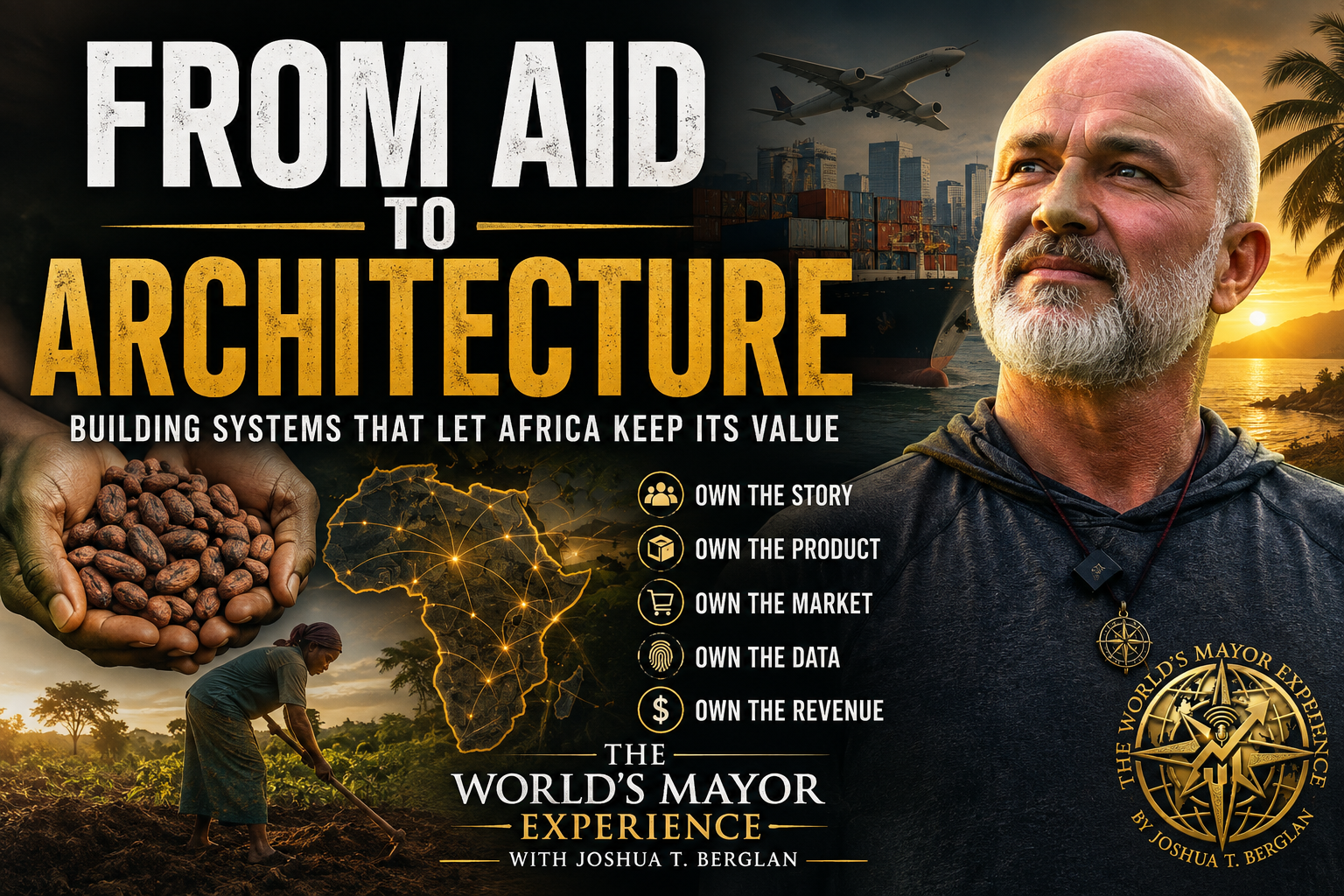
A story can go viral while the person inside the story remains poor. A product can become popular while the original producer disappears from the supply chain. A community can be featured while someone else owns the footage, the platform, the audience, the data and the revenue.
Exposure is not empowerment. Attention is not ownership. Being featured is not the same as being included. Virality is not the same as value.
Every media and economic initiative should ask:
- Who owns the story?
- Who owns the photographs and footage?
- Who owns the brand?
- Who controls the customer relationship?
- Who controls the data and payment pathway?
- Who benefits from the story five years from now?
The goal is not to make African producers more visible so others can extract from them more efficiently.
The goal is to make them visible, trusted, documented, protected and powerful enough to participate in defining their own value.
The Phone Can Become the Beginning
A mobile phone cannot repair every broken economic system, but it can become the beginning of a public record.
It can document the land, record the harvest, interview the farmer, capture the production process, demonstrate the quality and connect the producer with the people searching for what they provide.
We are here.
We produce this.
This is where it comes from.
This is how we work.
This is what makes it valuable.
This is how you can do business with us.
Sometimes the first act of economic resistance is refusing to remain undocumented.
Somewhere, a farmer may be praying for a buyer while a buyer is searching for a reliable farmer. A founder may be praying for capital while an investor is searching for a meaningful opportunity. A community may be praying for tourism while a traveler is searching for a destination with beauty, culture and purpose.
The problem may not be that the answers do not exist. The problem may be that the answers cannot find one another.
Media can become the bridge.
African Producers Need More Than Access
Access can be temporary. It can be controlled, restricted or withdrawn. It can still leave someone else with all the power.
African producers need identity. They need documentation. They need direct relationships. They need trusted systems. They need ownership. They need infrastructure. They need the power to speak for themselves and participate in defining their own value.
The producer does not need a temporary invitation into someone else's room. The producer needs a permanent place inside the economy.
The farmer must become visible—not for fame, but for negotiation.
The cooperative must become visible—not for applause, but for financing.
The village must become visible—not for exploitation, but for opportunity.
The culture must become visible—not as a trend, but as an inheritance.
The producer must become visible—not as someone else's content, but as an owner.
Let There Be Light
Light does not create the farmer's value. It reveals it.
Light does not create the quality of the product. It allows others to see it.
Light does not manufacture the opportunity. It makes the opportunity visible.
But when the light comes, responsibility comes with it. We must tell the truth, protect the origin, honor the people, document the evidence, refuse exploitation and build systems that keep producers connected to the value they create.
The Price Has Been Paid for Long Enough
It is time to document the harvest, name the producer, protect the story, create the evidence, build the platform and open the marketplace.
Let the people who feed the world, supply the world and create value for the world finally participate in the wealth their work generates.
Frequently Asked Questions
What is the price of invisibility for African producers?
Invisibility can lead to lower prices, weak negotiating power, limited financing, fewer direct buyer relationships, lost ownership and the separation of producers from the value their work creates.
How can media help African farmers and cooperatives?
Strategic media can document production, identify producers, establish origin, demonstrate quality, preserve evidence and connect producers with buyers, banks, policymakers, investors and consumers.
Why is visibility alone not enough?
Visibility without ownership can create additional exploitation. Producers should retain appropriate control over their stories, brands, customer relationships, data, media assets and the long-term economic value generated.
What role does faith play in economic visibility?
Faith encourages preparation and stewardship. Developing, documenting, protecting and responsibly sharing a gift can help it reach the people it was created to serve.
What do African producers need beyond market access?
Producers need documented identities, trusted systems, direct relationships, ownership protections, reliable infrastructure and the power to participate in defining their own economic value.