The Shopkeeper Revolution | African Food Sovereignty
Episode Four

The Shopkeeper Revolution

How Local Retail Can Rebuild African Communities

Feeding the Communities That Feed the World

📍 Limbe, Cameroon 🎙 Joshua T. Berglan 🌍 The World’s Experience 🌱 Food Sovereignty

Watch the Episode

Listen to the Podcast

Executive Summary

Bottom line: The Shopkeeper Revolution argues that Africa’s food future cannot depend only on farms, exports, or raw commodities.

Communities need local ownership from seed to soil, farmer to processor, distributor to shopkeeper, and shopkeeper to family table.

The shopkeeper is the last mile of food sovereignty.

Africa already produces enormous agricultural value, but many producing communities still struggle with food access, supply shortages, affordability, and limited local processing.

Organic and regenerative agriculture
Small shop empowerment
Seed sovereignty
Women-led and youth-led retail
Clean food access
Community-based distribution
Local agro-processing
Media that documents the real supply chain

The goal is not just to sell products. The goal is to feed the communities that feed the world.
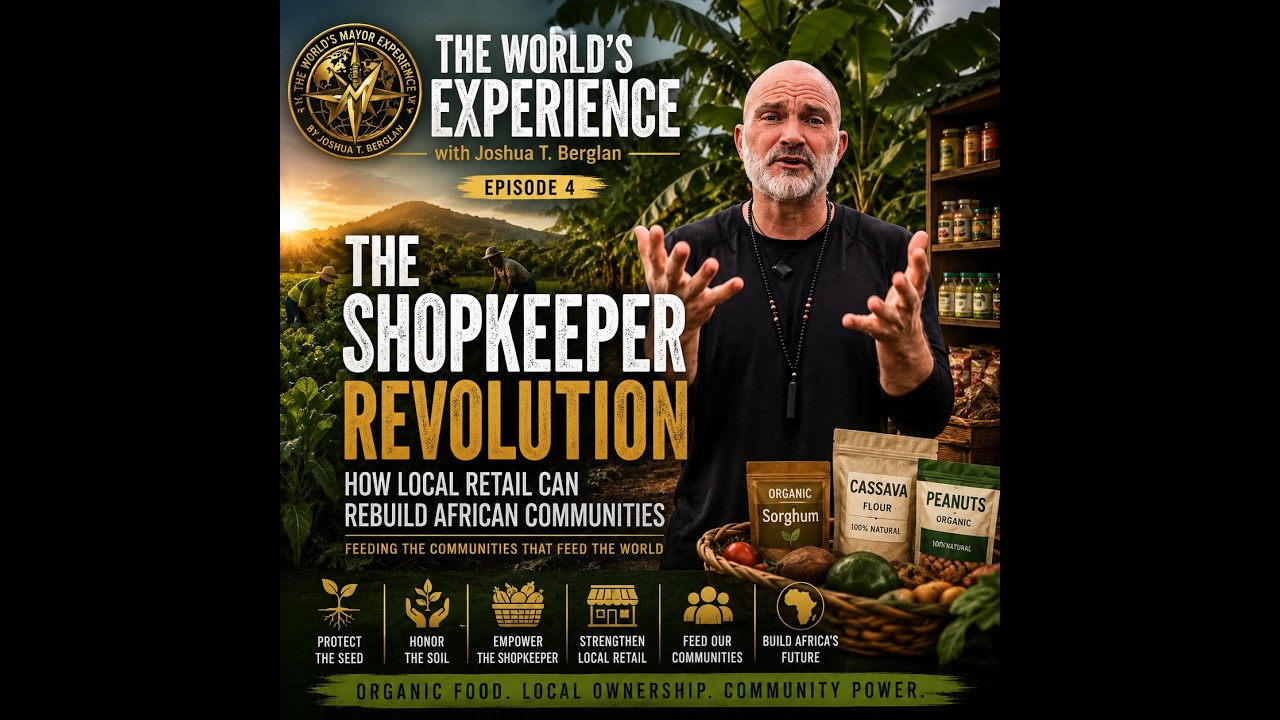
The Shopkeeper Revolution episode cover with Joshua T. Berglan The World’s Experience from Cameroon
Agricultural field representing soil, seed sovereignty, and farming From seed to soil
Small retail shop shelves representing local food distribution From shelf to family table

Deep-Dive Chapters

1. The Vision Before the Revolution

Many people carry visions that feel too big for their current life. Vision may be the first evidence of an assignment before the world recognizes it.

2. Purpose While the Body Is Shaking

Joshua shares how his tremors returned and how purpose often calls before life feels perfect.

3. Why Agriculture Is Bigger Than Farming

Agriculture includes processing, packaging, retail, logistics, branding, clean food, youth entrepreneurship, and local ownership.

4. The African Food Contradiction

How can communities grow food but still struggle to afford food? The issue is not just production. It is value capture.

5. The Shopkeeper as the Last Mile of Food Sovereignty

The shopkeeper connects the farm, processor, distributor, and family table. Without local shops, the system is incomplete.

6. Seed Sovereignty, Organic Farming, and Dependency

Seed sovereignty protects the farmer’s ability to control what they plant, save, exchange, and grow.

7. Local Retail as Community Infrastructure

A small shop is where families buy essentials, neighbors gather, trust is built, and local money circulates.

8. Media Makes the Food System Visible

Media can document farmers, explain supply chains, recruit retailers, educate consumers, and build trust.

Feed the communities that feed the world.

Why This Conversation Matters

The future of Africa’s food system cannot be controlled only by global corporations, foreign markets, or distant investors.

It must be shaped by farmers, shopkeepers, mothers, youth, processors, local governments, community leaders, and builders on the ground.

Food is never just food. Food is health. Food is economics. Food is culture. Food is sovereignty.

The communities that feed the world deserve to share in the value they create.

This is not about creating a perfect system overnight. It is about beginning with the right values: clean food, organic farming, regenerative soil, local ownership, fair distribution, small shop empowerment, community supply, youth opportunity, women-led enterprise, media transparency, and dignity from farm to shelf.

Frequently Asked Questions

What is the Shopkeeper Revolution?

Bottom line: It is the idea that small local retailers can help rebuild African communities by connecting farmers, processors, distributors, and families.

Why are shopkeepers important to food sovereignty?

Bottom line: Shopkeepers are the final link between food production and the family table.

What does “feeding the communities that feed the world” mean?

Bottom line: Agricultural communities should benefit from the food and value they help produce.

Why does Africa need local food distribution?

Bottom line: Local food distribution keeps more value inside local economies.

Why is seed sovereignty important?

Bottom line: Seed sovereignty protects farmers’ control over what they plant, save, exchange, and grow.

What is regenerative agriculture?

Bottom line: Regenerative agriculture restores soil health, protects biodiversity, and improves long-term land productivity.

Why does Joshua T. Berglan warn against GMO dependency?

Bottom line: The concern is dependency on systems that may reduce farmer freedom, seed control, and local ownership.

How can media support African food systems?

Bottom line: Media can document farmers, explain supply chains, educate consumers, recruit retailers, and build trust.

Joshua T. Berglan The World’s Experience

About Joshua T. Berglan

Joshua T. Berglan is known as The World’s Mayor and is the creator of The World’s Experience.

His work documents stories, communities, creators, food systems, media, agriculture, and the people building new futures from the ground up.

Support the Mission

Help us continue documenting stories that matter and empowering communities through media, food sovereignty, and local ownership.

Visit JoshuaTBerglan.com

The Future May Be Sitting on a Small Shop Shelf

Protect the seed. Honor the soil. Strengthen the shopkeeper. Build the chain locally. Keep the food clean. Keep the value close.

Watch the Episode
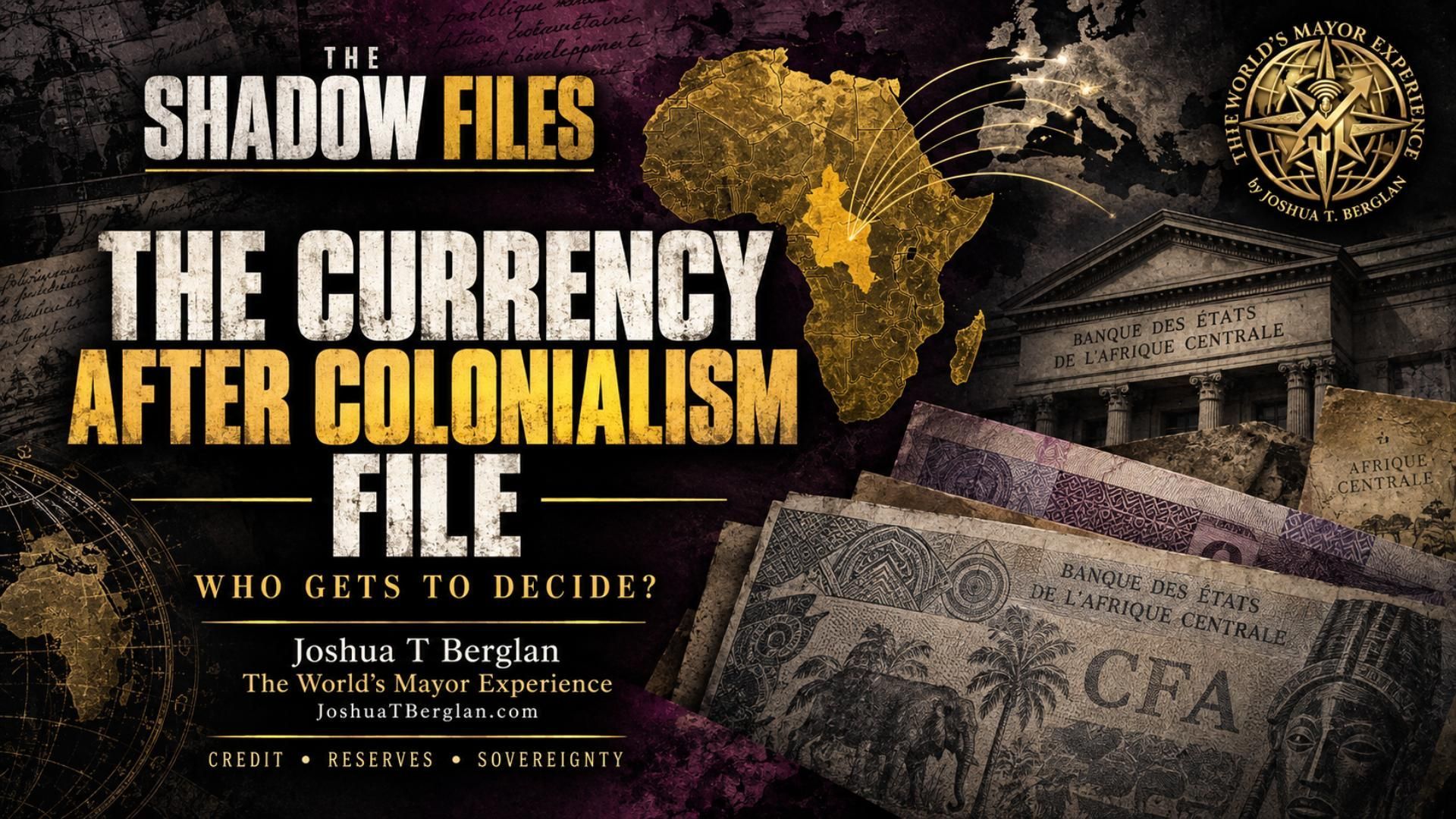
Who Controls Cameroon’s Money? The CFA Franc Explained
By Joshua Berglan • September 22, 2026
Who controls the CFA franc in Cameroon? BEAC, the French Treasury account, France’s two board seats, the euro peg — and what the 50% rule really means.
Declassified US and British records on Kwame Nkrumah’s 1966 overthrow:
By Joshua Berglan • September 15, 2026
Declassified US and British records on Kwame Nkrumah’s 1966 overthrow: the psychological-warfare plan, the plotters, the aid — and what they don’t prove.
What really happened to Patrice Lumumba? The documented CIA plot, Belgium's own findings, Katanga's
By Joshua Berglan • September 6, 2026
What really happened to Patrice Lumumba? The documented CIA plot, Belgium's own findings, Katanga's uranium, and the MI6 question that is still unresolved.
Cameroon recorded 22.3 kg of gold exports in 2023; partner countries reported 15.2 tonnes.
By Joshua Berglan • August 29, 2026
Cameroon recorded 22.3 kg of gold exports in 2023; partner countries reported 15.2 tonnes. The Shadow Files #2 follows the evidence, and its limits.
The $289M Cameroon Timber Gap | The Shadow Files #01
By Joshua Berglan • August 21, 2026
A $289 million average annual gap sits between what Cameroon reports exporting in timber and what its partners report importing. Episode 1 of The Shadow Files.
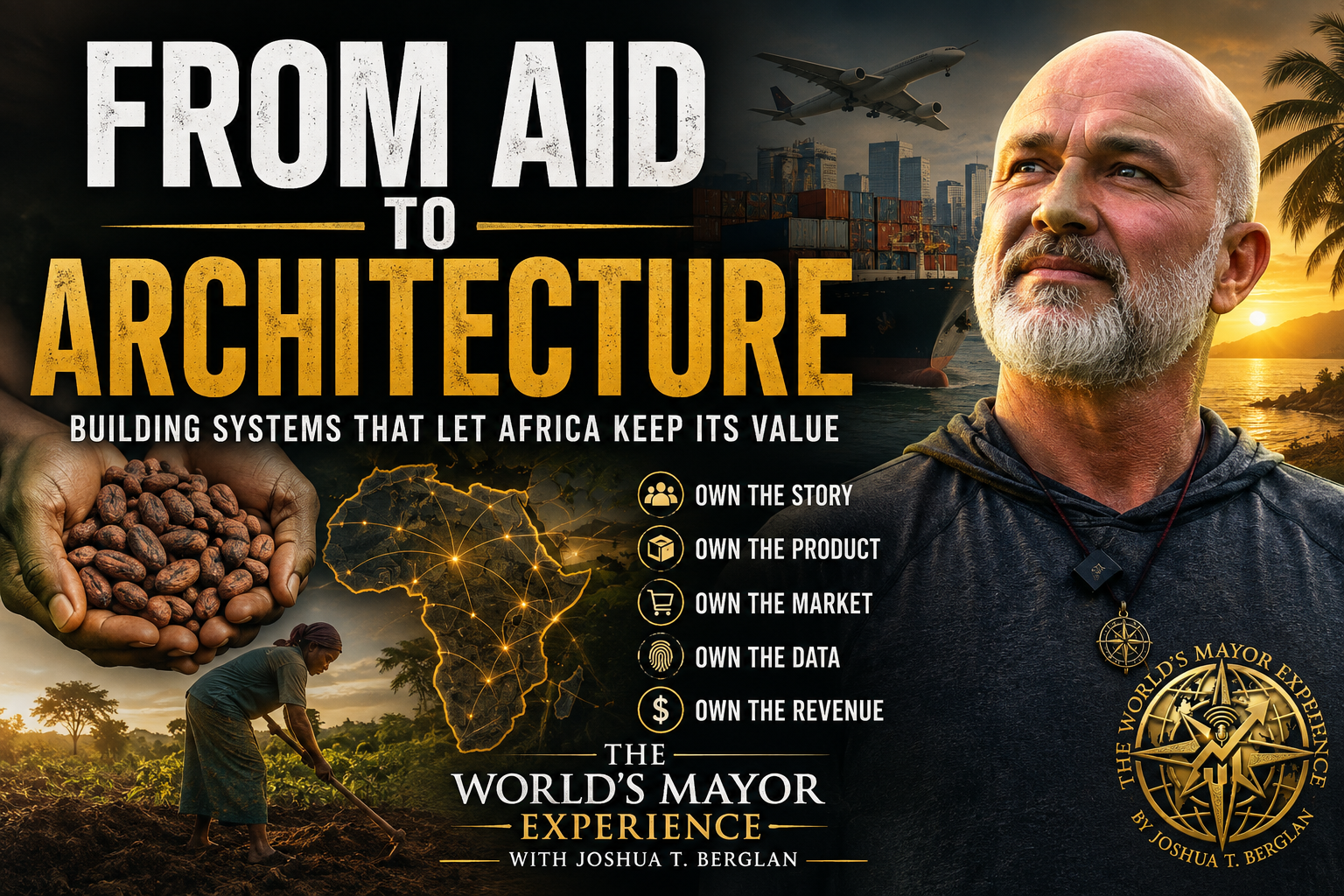
From Aid To Architecture Building Systems Africa Keeps Value
By Joshua Berglan • August 13, 2026
Aid asks what we gave. Architecture asks what remained. Joshua T. Berglan on ownership, value chains, and building systems that let Africa keep its value.